BPC-157 vs KPV: Gastric Pentadecapeptide vs Anti-Inflammatory Tripeptide Comparison
Executive Summary
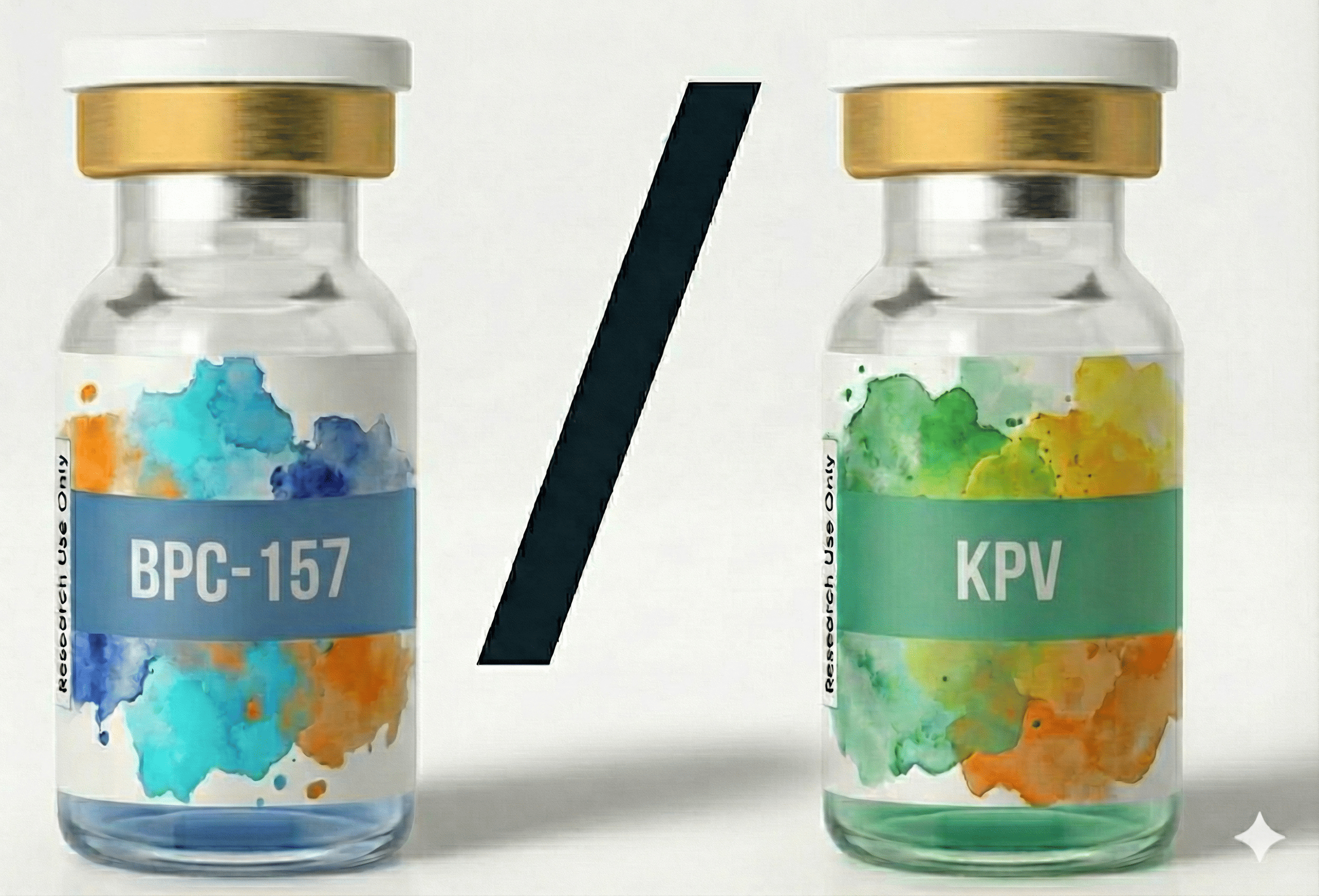
BPC-157 and KPV represent different approaches to tissue healing and inflammation control, with overlapping applications in gastrointestinal research. BPC-157, a stable gastric pentadecapeptide, promotes healing through angiogenesis and growth factor modulation across multiple tissue types. KPV, a tripeptide derived from the C-terminus of alpha-MSH, provides potent anti-inflammatory effects through NF-κB inhibition independent of melanocortin receptor activation. While BPC-157 excels at structural tissue repair, KPV specializes in reducing inflammatory cascades. For inflammatory bowel disease research, both peptides show promise with complementary mechanisms.
Peptide Profiles
Head-to-Head Comparison
| Property | BPC-157 | KPV |
|---|---|---|
| Full Name | Body Protection Compound-157 | Lysine-Proline-Valine (α-MSH 11-13) |
| Molecular Formula | C62H98N16O22 | C16H30N4O4 |
| Sequence Length | 15 amino acids | 3 amino acids (tripeptide) |
| Origin | Gastric juice protein | C-terminus of α-MSH |
| Primary Mechanism | Angiogenesis, growth factors | NF-κB inhibition |
| Melanocortin Receptor | Not involved | Independent of MCR activation |
| Anti-inflammatory | Moderate (indirect) | Potent (direct) |
| Tissue Healing | Strong (multiple tissues) | Moderate (via inflammation control) |
| GI Application | Ulcer/IBD healing | IBD inflammation control |
| Administration | Oral, SC, IM, topical | SC, oral, topical |
Mechanism of Action Differences
BPC-157 and KPV address tissue damage through fundamentally different biological pathways—one promoting structural repair, the other controlling inflammatory damage.
BPC-157: Regenerative Healing
BPC-157 promotes tissue repair through multiple growth factor and vascular pathways:
- Angiogenesis: Potent VEGF upregulation promotes new blood vessel formation to injured tissues
- Growth Factors: Increases EGF, FGF, and other growth factors supporting tissue regeneration
- Nitric Oxide System: Modulates NO pathways for vasodilation and tissue protection
- Cytoprotection: Protects cells from various toxic insults including NSAIDs and alcohol
- Broad Tissue Action: Demonstrated effects on GI, tendon, muscle, nerve, and bone tissues
KPV: Direct Anti-Inflammatory
KPV acts primarily through inflammatory pathway inhibition:
- NF-κB Inhibition: Directly inhibits nuclear factor kappa-B, a master regulator of inflammatory gene expression
- Cytokine Suppression: Reduces TNF-α, IL-1β, IL-6, and other pro-inflammatory cytokines
- MCR-Independent: Unlike parent peptide α-MSH, KPV's anti-inflammatory effects do not require melanocortin receptor activation
- Cell Penetration: Small size allows direct intracellular action
- Antimicrobial: Additional antimicrobial properties against various pathogens
Complementary Action: BPC-157 addresses the "repair" phase of healing, while KPV addresses the "inflammation control" phase. Combining both could theoretically provide comprehensive coverage of the healing cascade.
Comparative Research Efficacy Data
BPC-157 GI Research
BPC-157 has extensive preclinical data for gastrointestinal applications:
- Ulcer Healing: Accelerated healing of various ulcer models including NSAID-induced, alcohol-induced, and stress ulcers
- IBD Models: Improved parameters in experimental colitis models
- Fistula Repair: Enhanced healing of various fistula types
- Esophageal Damage: Protection against reflux-related esophageal injury
- Liver Protection: Hepatoprotective effects in various liver injury models
KPV GI and Inflammatory Research
KPV has demonstrated specific anti-inflammatory applications:
- IBD Research: Reduced inflammation in experimental colitis; decreased inflammatory cytokines in intestinal tissue
- Wound Healing: Enhanced wound closure through inflammation resolution
- Antimicrobial: Activity against Staphylococcus aureus, Candida, and other pathogens
- Oral Administration: Studies suggest oral stability for intestinal delivery
- Dermal Application: Anti-inflammatory effects in skin inflammation models
IBD Research Comparison
For inflammatory bowel disease research specifically:
- BPC-157: Promotes mucosal healing and tissue regeneration; multiple mechanisms
- KPV: Directly suppresses inflammatory signaling; targeted mechanism
- Combination: Theoretically addresses both inflammation and repair phases
Safety and Tolerability Profile
BPC-157 Safety Profile:
- Extremely Low Toxicity: No LD50 established; very high safety margin in animal studies
- Gastric Origin: Derived from naturally occurring gastric protein
- No Hormonal Effects: Does not affect testosterone, estrogen, or other hormonal axes
- Gastric Stability: Unusual stability allows oral administration
- Long Research History: Decades of preclinical research without significant safety concerns
KPV Safety Profile:
- Natural Origin: Derived from endogenous α-MSH, suggesting good biocompatibility
- Small Size: Tripeptide nature may reduce immunogenicity
- MCR-Independent: Avoids melanocortin-related effects (tanning, sexual effects) seen with α-MSH
- Limited Long-term Data: Less extensive research history than BPC-157
- No Significant AEs: Available research does not report significant adverse events
Comparative Assessment: Both peptides appear well-tolerated in available research. BPC-157 has a longer research history and more extensive safety data. KPV's small size and natural origin suggest good tolerability, though less data is available.
Research Verdict: Repair vs. Inflammation Control
Choose BPC-157 When:
- Structural tissue repair is the primary goal
- Multiple tissue types are affected (GI, tendon, muscle, nerve)
- Ulcer healing or fistula repair is the focus
- Angiogenesis and growth factor stimulation are desired
- Extensive preclinical safety data is important
Choose KPV When:
- Direct anti-inflammatory effect is needed
- NF-κB pathway inhibition is the research target
- Inflammatory cytokine reduction is the primary outcome
- Minimal systemic effects are preferred (tripeptide size)
- Antimicrobial properties are beneficial
Combination Consideration: For inflammatory bowel disease and other conditions involving both inflammation and tissue damage, the combination of BPC-157 (healing) and KPV (inflammation control) may provide comprehensive coverage. BPC-157 addresses the repair phase while KPV controls the ongoing inflammatory damage. No formal research has evaluated combined use.
Research Positioning: BPC-157 is the broader healing peptide with multiple mechanisms; KPV is the targeted anti-inflammatory with specific NF-κB inhibition. Choice depends on whether the research prioritizes structural repair or inflammation control.
Frequently Asked Questions
Can BPC-157 and KPV be combined for IBD research?
BPC-157 and KPV have complementary mechanisms that may provide synergistic benefits for inflammatory bowel disease research. BPC-157 promotes tissue repair and mucosal healing through angiogenesis and growth factors, while KPV directly suppresses inflammation through NF-κB inhibition. Theoretically, combining both would address both the inflammation and repair phases of healing. However, no formal research has evaluated combined use.
What makes KPV different from other alpha-MSH peptides?
KPV is unique among α-MSH-derived peptides because its anti-inflammatory effects are independent of melanocortin receptor activation. While full α-MSH and related peptides (like Melanotan) activate melanocortin receptors causing tanning and other effects, KPV works by directly inhibiting NF-κB inside cells. This means KPV provides anti-inflammatory benefits without the skin darkening, appetite suppression, or sexual effects associated with melanocortin receptor activation.
Which is better for gut healing: BPC-157 or KPV?
BPC-157 has more extensive research specifically for gut healing and tissue repair, demonstrating effects on ulcers, fistulas, and IBD models. KPV's strength is in direct inflammation control through NF-κB inhibition. For structural healing (ulcers, mucosal damage), BPC-157 has stronger evidence. For controlling inflammatory flares, KPV's targeted anti-inflammatory mechanism may be more appropriate. Many researchers view them as complementary rather than competing options.
Citations & References
Sikiric P, Seiwerth S, Rucman R, et al.
Current pharmaceutical design (2011)
Kannengiesser K, Maaser C, Heidemann J, et al.
Inflammatory bowel diseases (2008)
Follow Peptpedia on Google
Add Peptpedia as a Preferred Source and Google can highlight our links with a "preferred" badge in your Top Stories and AI Overviews.