BPC-157 vs TB-500: Which Is Better? Gut, Tendon & Muscle Data
Executive Summary
BPC-157 is the better-supported choice in animal data for gut, tendon and ligament, and oral-stability research; TB-500 (and its parent thymosin β-4) is the better-supported choice for cell migration, muscle, and cardiac repair. They are not interchangeable. BPC-157's human evidence is thin but not zero — a phase II programme in ulcerative colitis (PL 14736, PMID 22300085) and small retrospective series, with no completed phase III. TB-500 itself has no published human data; the human trials used full-length Tβ4 (RGN-352), which is not the same molecule.
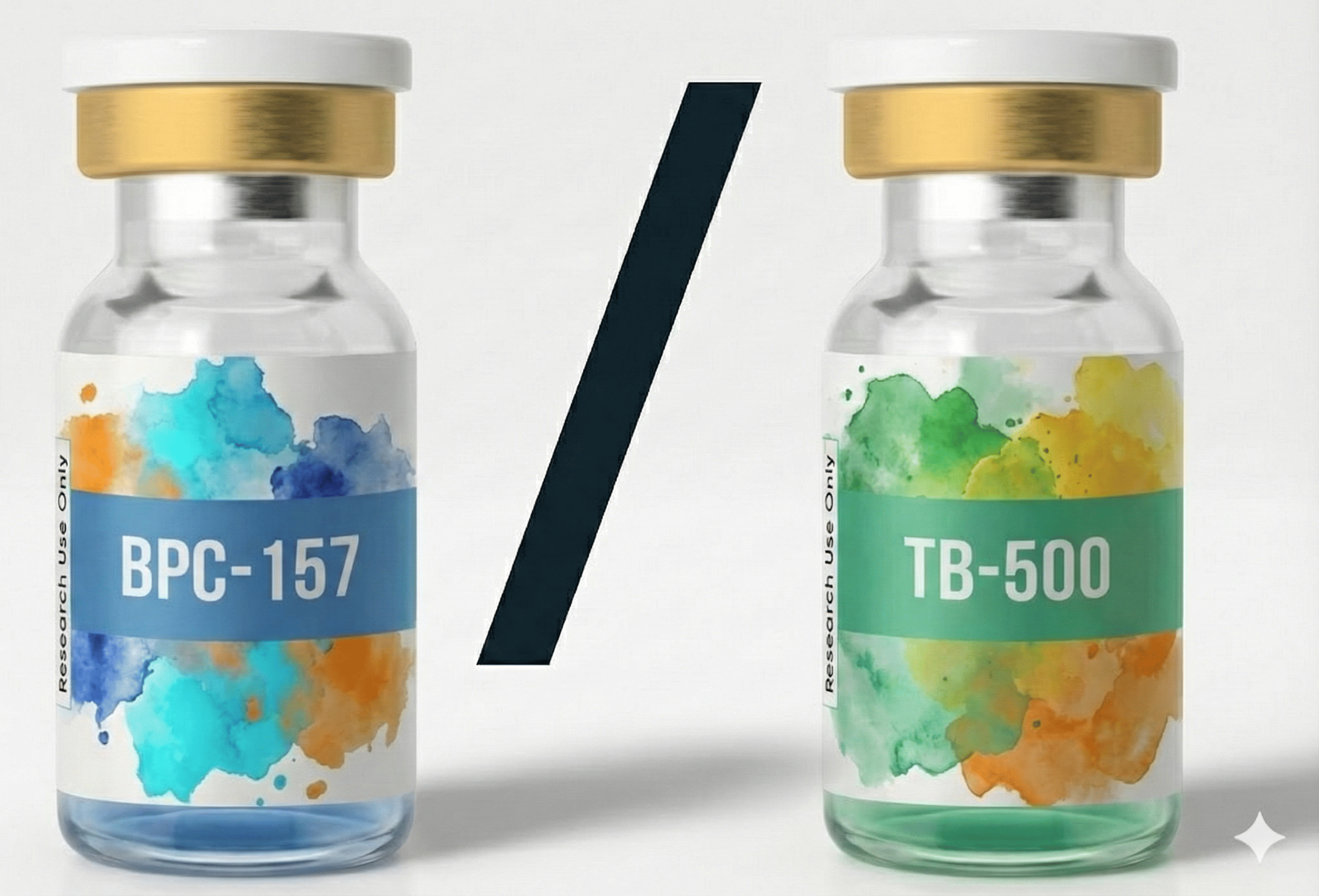
Peptide Profiles
Head-to-Head Comparison
| Property | BPC-157 | TB-500 |
|---|---|---|
| Full Name | Body Protection Compound-157 | TB-500 (synthetic thymosin β-4 analog) |
| Molecular Formula | C62H98N16O22 | C38H68N10O14 (Ac-LKKTETQ, ~889 Da); full Tβ4 is C212H350N56O78S |
| Sequence Length | 15 amino acids | 7 aa (Ac-LKKTETQ) — some suppliers sell 43-aa full Tβ4 under the same name |
| Origin | Derived from gastric juice protein | Synthetic peptide mimicking Thymosin β-4 |
| Primary Mechanism | Angiogenesis & GHR Up-regulation | G-actin Sequestration & Cell Migration |
| Key Pathway | VEGF upregulation | G-actin sequestration |
| Stability | Highly stable (gastric-resistant) | Moderate (requires careful handling) |
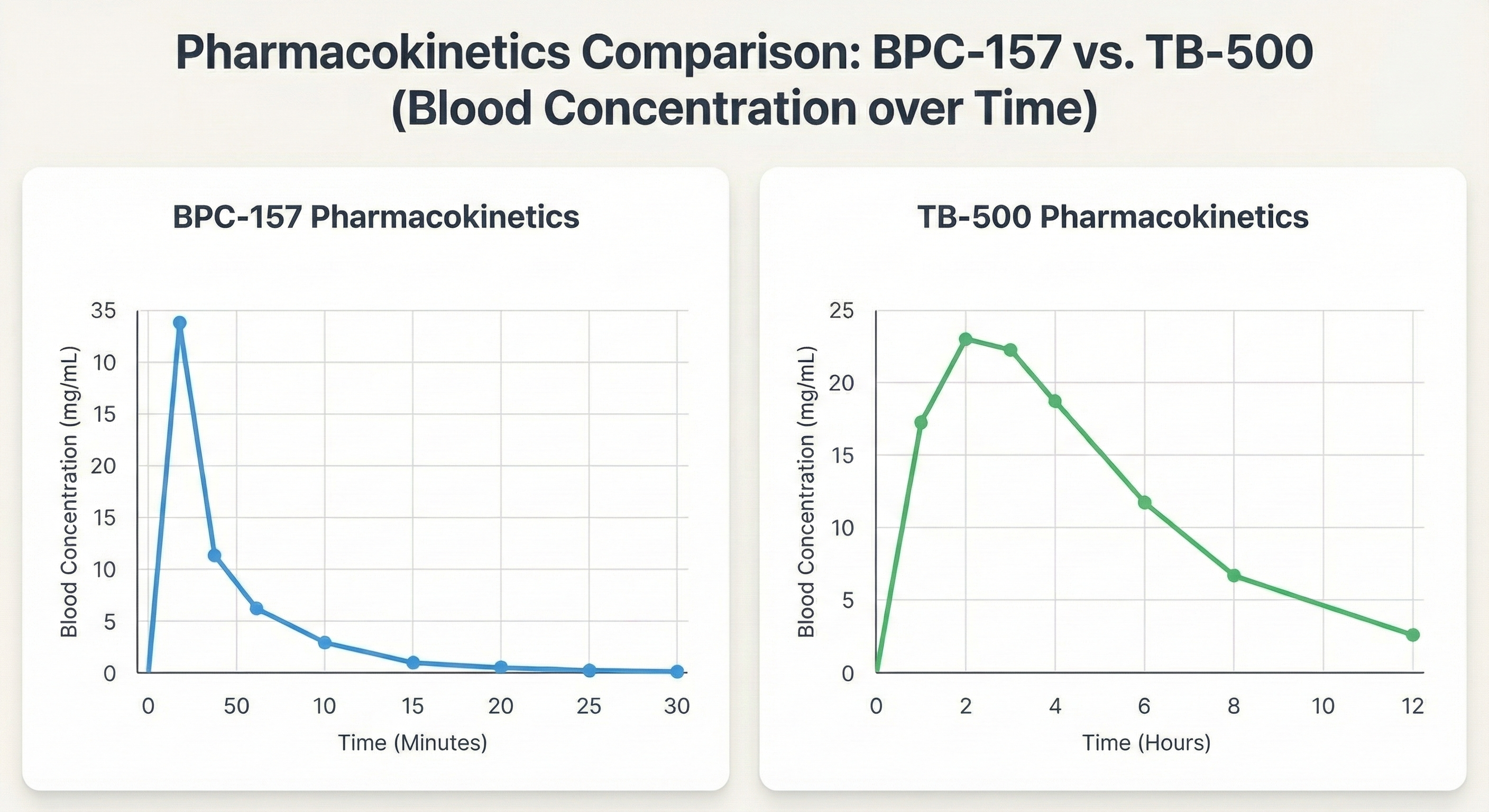
| Systemic Half-Life | Very short (~15.2 to 30 minutes) | Variable; parent molecule Tβ4 persists longer |
| Molecular Stability | Gastric Stable: Resists degradation in human gastric juice for 24h | Gastric Sensitive: Rapidly degraded by digestive enzymes; requires injection |
| Healing Domain | "Vessel & Valve" (Ligaments, GI tract, Tendon-to-bone) | "Cellular Mobility" (Muscle tissue, Cornea, Systemic repair) |
| Administration Routes | Oral, SC, IM, topical | SC, IM injection |
| Research Focus | GI, tendon, nerve healing | Cardiac, muscle, wound repair |
| Anti-inflammatory | Moderate | Significant |
| Human data | Phase II in ulcerative colitis (PL 14736); small retrospective series; no completed Phase III | None for TB-500; parent Tβ4 (RGN-352) reached Phase 1/2, then halted for manufacturing |
| FDA / WADA | Not FDA-approved; WADA S0 (Non-Approved Substances) | Not FDA-approved; WADA S2 (thymosin β-4 and derivatives) |
| Best-supported research use | GI, tendon/ligament, oral-stability models (animal) | Cell migration, muscle, cardiac repair (animal; Tβ4 parent) |
Molecular Mechanisms: Beyond the Basics
The G-Actin vs. GHR Distinction
While both peptides facilitate healing, they pull different molecular levers. BPC-157 acts as a master signaling molecule, with microarray analysis revealing a 7-fold up-regulation of Growth Hormone Receptor (GHR) in tendon fibroblasts by the third day of treatment. This suggests that BPC-157 does not just "heal"; it makes the target tissue significantly more sensitive to the body's endogenous growth factors.
In contrast, TB-500 (Thymosin β-4) functions as a G-actin sequestering molecule. By preventing G-actin from polymerizing into F-actin, TB-500 maintains a pool of unpolymerized actin that allows cells, such as keratinocytes and fibroblasts, to physically "crawl" to the site of an injury. This makes TB-500 superior for broad tissue remodeling and muscle repair where cell migration is the primary bottleneck.
Pharmacokinetics and Stability
Gastric Stability vs. Enzymatic Sensitivity
A major differentiator for researchers is BPC-157's unique gastric stability. As a peptide derived from human gastric juice, it is natively resistant to low pH and proteolytic enzymes. Research indicates BPC-157 remains fully stable in human gastric juice for at least 24 hours, which supports its efficacy in oral research models for GI repair.
Conversely, TB-500 is highly sensitive to gastric enzymes. For systemic research, it must be administered via subcutaneous or intramuscular injection to bypass the digestive tract and ensure bioavailability.
Mechanism of Action Differences
Understanding how BPC-157 and TB-500 promote healing reveals why researchers often consider them complementary rather than interchangeable. Preclinical rodent studies support effects on angiogenesis, endothelial function, and nitric-oxide-related signaling, though these effects are reproducible in animals but not yet validated in humans.
BPC-157: The Angiogenic Healer
BPC-157's healing effects center on blood vessel formation and cytoprotection:
- VEGF Upregulation: Increases vascular endothelial growth factor, promoting new blood vessel formation to injured tissues (PMID: 27847966, PMID: 40789979)
- Nitric Oxide System: Modulates NO pathways, protecting tissues from oxidative damage and improving blood flow (PMID: 31158953)
- Growth Factor Pathways: Interacts with and functionally engages growth-factor–dependent cytoprotective and regenerative pathways, producing growth-factor–like effects (PMID: 11718984, PMID: 40789979)
- Cytoprotective: Protects cells from various toxic insults including NSAIDs, alcohol, and ischemia (PMID: 31158953)
- Nerve Healing: BPC-157 indirectly modulates GABAergic inhibitory control, supporting nerve regeneration (PMID: 15840402)
TB-500: The Cell Migration Facilitator
TB-500 is a synthetic peptide designed to mimic Thymosin β-4, which is well-established in actin sequestration, cell migration, wound repair, and anti-inflammatory signaling. Note: TB-500 is far less studied than full-length Thymosin β-4, and the following effects are primarily supported for the parent compound:
- Actin Binding: Sequesters G-actin monomers, regulating cytoskeletal dynamics essential for cell movement (PMID: 22074294 - Thymosin β-4)
- Cell Migration: Enables endothelial cells, keratinocytes, and other repair cells to migrate to injury sites (PMID: 22074294 - Thymosin β-4)
- Anti-inflammatory: Reduces inflammatory cytokines and promotes resolution of inflammation (PMID: 30116499 - Thymosin β-4)
- Matrix Metalloproteinase Regulation: Modulates tissue remodeling enzymes for proper scar formation (PMID: 16607611 - Thymosin β-4)
- Stem Cell Recruitment: May enhance mobilization of stem cells to damaged areas (PMID: 22074294 - Thymosin β-4)
Complementary Action: BPC-157 establishes the blood supply (angiogenesis) needed for healing, while TB-500 facilitates the cellular migration and tissue remodeling that follows. This sequential/parallel action provides rationale for combination use in research settings.
Comparative Research Efficacy Data
BPC-157 Research Evidence
BPC-157 has extensive preclinical data across multiple tissue types:
- Tendon/Ligament: Accelerated healing in rat Achilles tendon transection models; improved collagen organization and tensile strength (PMID: 21030672)
- Gastrointestinal: Protection against NSAID-induced ulcers, IBD models, fistula healing in preclinical studies (PMID: 31158953)
- Nerve: Enhanced sciatic nerve regeneration; improved recovery in crush injury models (PMID: 31266512)
- Bone: Accelerated fracture healing and pseudoarthrosis repair in animal models (PMID: 10071911)
- Muscle: Faster recovery from muscle crush injuries and systemic corticosteroid-induced damage (PMID: 40756949)
TB-500 Research Evidence
TB-500 is a synthetic fragment of Thymosin Beta-4, often used as an alternative to the full-length protein. The following effects are primarily documented for Thymosin Beta-4:
- Cardiac: Reduced infarct size and improved cardiac function in murine MI models; promoted cardiomyocyte survival (PMID: 25015963)
- Wound Healing: Accelerated wound closure, reduced scarring in dermal wound models (PMID: 25015963, PMID: 27450738)
- Corneal: Enhanced corneal epithelial healing; basis for ophthalmic applications (PMID: 19668473)
- Muscle: Improved muscle regeneration following injury; stem cell activation (PMID: 20880960)
- Hair: Stimulated hair follicle stem cells in preclinical research (PMID: 14657002)
Human Clinical Data
Both peptides lack robust human clinical trial data, though Thymosin Beta-4 (the parent compound of TB-500) has more formal clinical exposure through RegeneRx Biopharmaceuticals' development programs.
BPC-157 Clinical Status
- Limited human data; some work in inflammatory bowel disease (PMID: 22300085)
- A clinical trial has been registered, though its current status is unclear (PMID: 40756949)
- Regulatory note: BPC-157 is prohibited by WADA/USADA for sport use (added to the Prohibited List in 2022). TB-500 and Thymosin Beta-4 are also prohibited by WADA/USADA under S2 (Peptide Hormones, Growth Factors, Related Substances and Mimetics), applicable at all times both in-competition and out-of-competition
TB-500 / Thymosin Beta-4 Clinical Trials: The RGN-352 and RGN-259 Programs
RegeneRx Biopharmaceuticals has pursued two clinical development programs for Thymosin Beta-4, providing the most substantial human clinical data available for any TB-500-related compound:
RGN-352 (Injectable Thymosin Beta-4 for Cardiac Repair):
- Phase 1 trial (completed): A double-blind, placebo-controlled study enrolled 40 healthy volunteers across four cohorts of 10 subjects each, testing escalating dose levels of intravenous Thymosin Beta-4 administered daily over 14 days. RGN-352 was shown to be safe and well-tolerated with no serious drug-related adverse events reported (PMID: 20536472)
- Phase 2 AMI trial (incomplete): RegeneRx designed a Phase 2 proof-of-concept trial (NCT01311518) to evaluate RGN-352 in approximately 75 patients with acute ST-segment elevation myocardial infarction (heart attack). Patients were to be randomized to 1200 mg, 450 mg, or placebo, administered intravenously daily for 3 days followed by weekly for 4 weeks. In March 2011, the FDA placed the trial on clinical hold due to GMP compliance issues at the contract manufacturer — not safety concerns with RGN-352 itself. The trial did not resume enrollment
- Preclinical cardiac evidence: Animal models of myocardial infarction demonstrated RGN-352 reduced scar volume, improved cardiac function, and increased survival, forming the basis for the clinical program (PMID: 25015963)
RGN-259 (Thymosin Beta-4 Ophthalmic Solution for Dry Eye):
- ARISE-1 and ARISE-2 Phase 3 trials: Evaluated Thymosin Beta-4 eye drops for dry eye disease with mixed results — some endpoints showed improvement in signs of dry eye, but the pre-specified co-primary endpoints were not met, though some secondary endpoints showed statistically significant improvements in certain signs of dry eye (PMID: 23050815)
- These ophthalmic trials represent the most advanced clinical testing of any Thymosin Beta-4 formulation
Independent Pilot Study (China, 2016):
- A small pilot study randomized 10 STEMI (heart attack) patients into two groups: 5 receiving Thymosin Beta-4-pretreated endothelial progenitor cells (EPCs) and 5 receiving untreated EPCs
- After 6 months, the Thymosin Beta-4-pretreated group showed trends toward improved cardiac function markers including ejection fraction and exercise capacity, though the very small sample size (n=5 per group) means these results should be considered hypothesis-generating only, not evidence of efficacy (PMID: 27288307)
- No severe complications were reported in either group during follow-up
- Important: This study used Thymosin Beta-4 as a cell pretreatment agent ex vivo (EPCs exposed to TB4 before transplantation), not as a directly administered drug. The results are not directly comparable to systemic Thymosin Beta-4 or TB-500 administration
Key distinction: TB-500 is a synthetic fragment designed to mimic aspects of Thymosin Beta-4. The clinical trials above used full-length Thymosin Beta-4, not TB-500 specifically. The extent to which TB-500 reproduces the clinical effects of the full protein remains an open research question.
Safety and Tolerability Profile
BPC-157 Safety Profile: (PMID: 32334036, PMID: 25415472, PMID: 31158953)
- Preclinical Toxicity: Extremely low toxicity; no LD50 established even at very high doses in rodents
- No Hormonal Effects: Does not affect testosterone, estrogen, growth hormone, or other hormonal axes
- Gastric Origin: Derived from a naturally occurring human gastric protein, suggesting good biological compatibility
- Stability: Unusually stable in gastric acid, supporting oral administration potential
- Reported Effects: Anecdotal reports of fatigue, nausea in some research subjects
TB-500 Safety Profile: (PMID: 20536472) Note: Published safety data is primarily available for Thymosin Beta-4.
- Thymosin Beta-4 Heritage: Parent compound is endogenous and well-characterized
- Clinical Trials: RegeneRx trials showed generally favorable safety in ophthalmic and cardiac applications
- Cancer Concerns: Theoretical concerns about cell migration and tumor potential; research mixed
- Reported Effects: Head rushes, lethargy reported in research contexts
- Stability: Requires careful reconstitution and storage; more handling-sensitive than BPC-157
Combination Safety: No formal safety data exists for combined BPC-157 + TB-500 use. Mechanistic synergy does not guarantee safety synergy; research combining both should proceed cautiously.
Theoretical Risks and Safety Nuance
Preclinical Safety Observations
While no major adverse events are reported in the limited human data, researchers note theoretical concerns based on animal models. Because TB-500 is often overexpressed in malignant cells and facilitates angiogenesis, there is a theoretical risk that it could accelerate the growth of dormant tumors or increase metastatic capacity in certain cancer phenotypes.
Additionally, researchers should note BPC-157's WADA status. It was added to the Prohibited List in 2022 as a non-approved substance, reflecting its transition from an obscure research compound to a significant "substance of interest" in professional athletics.
Research Verdict: When to Use Each or Both
Choose BPC-157 When Research Focuses On:
- Gastrointestinal healing and protection
- Tendon and ligament injuries
- Nerve regeneration and neuroprotection
- Situations requiring oral administration
- Protection from NSAID or other toxic damage
Choose TB-500 When Research Focuses On:
- Cardiac tissue repair and cardioprotection
- Wound healing and scar reduction
- Systemic anti-inflammatory effects
- Muscle regeneration
- Hair follicle research
Consider Combination When:
- Comprehensive tissue repair is the goal (e.g., complex injury involving multiple tissue types)
- Maximizing angiogenesis AND cell migration is desired
- Research hypothesis involves sequential healing phases
Mechanistic Rationale for Stacking: The combination addresses different phases of healing—BPC-157 promotes blood vessel ingrowth and initial cytoprotection, while TB-500 facilitates the cellular repair and remodeling that follows vascularization. This represents complementary rather than redundant mechanisms.
Research Limitation: Neither peptide has completed Phase 3 human clinical trials for tissue healing indications. All efficacy claims remain preclinical, and combination protocols are entirely anecdotal.
Frequently Asked Questions
Can you stack BPC-157 and TB-500 together?
Research suggests BPC-157 and TB-500 may work synergistically when combined, as they target different healing mechanisms. BPC-157 promotes blood vessel formation (angiogenesis) and cytoprotection, while TB-500 facilitates cell migration and tissue remodeling. Note that TB-500 is often used or discussed as an alternative to full-length Thymosin β-4, so much of the supporting research applies to the parent compound. No formal clinical studies have evaluated this combination, and all stacking protocols derive from anecdotal research reports rather than controlled trials.
Which is better for tendon injuries: BPC-157 or TB-500?
Preclinical research suggests BPC-157 may be more specifically suited for tendon and ligament injuries. Studies show BPC-157 improves collagen organization, increases tensile strength, and accelerates healing in Achilles tendon models (PMID: 21030672). TB-500, while beneficial for general tissue repair, has less specific tendon-focused research. Some researchers use both, theorizing that BPC-157's angiogenic effects and TB-500's cell migration properties provide complementary benefits.
What is RGN-352 and what were the clinical trial outcomes for TB-500/Thymosin Beta-4?
RGN-352 is RegeneRx Biopharmaceuticals' injectable Thymosin Beta-4 formulation developed for cardiac repair and systemic tissue damage. The Phase 1 trial in 80 healthy volunteers demonstrated safety and tolerability across four dose levels with no serious adverse events. A Phase 2 trial (NCT01311518) was designed to test RGN-352 in ~75 heart attack patients, but was placed on FDA clinical hold in 2011 due to manufacturing (GMP) compliance issues at the contract site — not safety concerns with the drug itself. The trial did not resume. Separately, RegeneRx's ophthalmic formulation RGN-259 completed Phase 3 trials (ARISE-1 and ARISE-2) for dry eye with mixed results. These programs represent the most advanced human clinical testing of Thymosin Beta-4 to date.
Which peptide has better safety data: BPC-157 or TB-500?
Both peptides show favorable safety profiles in preclinical studies. BPC-157 has demonstrated remarkably low toxicity with no established lethal dose, and its origin from human gastric juice suggests good biological compatibility. TB-500's parent compound (Thymosin Beta-4) has more human clinical exposure through RegeneRx trials. Note: Published safety data for TB-500 specifically is limited—most evidence comes from Thymosin Beta-4 studies. Neither has completed comprehensive Phase 3 safety trials for tissue healing, so long-term human safety data remains limited for both.
Which is better, TB-500 or BPC-157?
Neither is universally better — they suit different research focuses. BPC-157 is the better-supported choice in animal data for gastrointestinal healing, tendon and ligament injuries, nerve regeneration, oral administration, and protection from NSAID or other toxic damage. TB-500 (and its parent Tβ4) is the better-supported choice for cardiac repair, cell migration, muscle regeneration, and wound remodeling. Some research protocols combine them. BPC-157's human record is a phase II ulcerative colitis programme (PL 14736) plus small retrospective series, with no completed phase III; TB-500 itself has no published human data.
Citations & References
Sikiric P, et al.
Gut and liver (2020)
Chang CH, Tsai WC, et al.
Journal of applied physiology (Bethesda, Md. : 1985) (2011)
Peng H, Xu J, Yang XP, et al.
American journal of physiology. Heart and circulatory physiology (2014)
Sosne G, Ousler GW
Clinical ophthalmology (Auckland, N.Z.) (2015)
Ruff D, et al.
Annals of the New York Academy of Sciences (2010)
Crockford D
Annals of the New York Academy of Sciences (2007)
Follow Peptpedia on Google
Add Peptpedia as a Preferred Source and Google can highlight our links with a "preferred" badge in your Top Stories and AI Overviews.